
Hair transplants in Stockholm
A hair transplant is not simply a question of how many grafts — it is about placement, direction, density and long-term planning. At Sherry Beauty Hair Clinic in Stockholm, every transplant is planned individually around a natural hairline, the long-term viability of your donor area, and a result that suits your face, your hair type and how your hair will change in the years ahead.
Send us photos for a first assessment
Send photos of your hair and we will make a first assessment of your hair loss and whether a transplant is the right treatment for you.
At a booked consultation we carry out a more advanced 3D analysis covering:
- An analysis of your hair loss and your goals
- An assessment of your donor area’s quality
- A recommendation of possible treatment options
- An estimate of the graft count you are likely to need
- A quote based on the extent of the treatment
- A 3D visualisation of a possible expected result
What does a hair transplant cost?
The price is based on the extent of the treatment and how many follicles need transplanting. At your consultation we go through your hair loss, donor area, likely result and the recommended graft count before giving you a clear quote.
The price includes:
- A free consultation with a doctor
- Advanced 3D analysis at your consultation
- 3 PRP treatments
- An aftercare kit
- Regular follow-up appointments
- Insurance through Folksam
Payment options: You can pay by card or bank transfer, or apply for interest-free instalments over up to 24 months through our financing partner Medical Finance. Instalment plans must be approved before your treatment date.
- Before surgery
The consultation can take place at the clinic or online. You meet a doctor with specific experience in hair loss and hair transplantation, who goes through your hair loss, the capacity of your donor area, the treatment options available and what result is realistically achievable.
We estimate the approximate graft count, design a hairline suited to your face shape, age, hair type and future hair development, and go through a quote based on the extent of the work. If you like, we can also run a 3D analysis visualising a possible expected result.
We also review your health declaration and discuss whether medical treatment could help slow further loss, preserve the hair you have and stimulate new growth — finasteride, dutasteride, minoxidil or PRP, for example, depending on your individual circumstances.
- On the day of surgery
When you arrive you are admitted, change into surgical clothing and are talked through the plan for the day. We check your blood pressure, pulse and oxygen saturation, among other things.
All patients receive preventive medication beforehand, including antibiotics and a corticosteroid to reduce the risk of infection, inflammation and swelling. A sedative is available before the procedure if you would like one.
Before surgery we recommend:
- Eating a proper breakfast before you come in
- Wearing a shirt, cardigan or top with a zip or buttons, so you do not have to pull anything over your head afterwards
-
We draw out the hairline and the rest of the recipient area. This was already discussed at your consultation, but on the day there is time to make adjustments together, unhurried.
The hairline is adapted to your forehead musculature, face shape, the graft count available, your donor area’s capacity and how your hair will develop.
-
The donor area — usually the back of the head — is normally shaved down to around 1 mm. How large an area is shaved depends on how many grafts need extracting.
The more grafts needed, the larger the area may need to be. In some cases shaving part of the donor area is enough; other patients choose to shave their whole head.
It is important that you arrive unshaven on the day. That lets us better assess the hair’s direction, natural growth pattern, density and any whorls we need to account for before we begin.
-
Both the recipient and donor areas are numbed with local anaesthetic. To reduce discomfort we use cooling and vibration alongside the injections.
You may feel pricking, stinging or pressure as the anaesthetic goes in, but most people tolerate it well. It starts working within a couple of minutes, after which the procedure itself is entirely pain-free.
-
Once the recipient area is numb we create the small sites where the follicles will later be implanted. For this stage you lie on your back.
We usually create the sites before extraction. That way we know exactly how many follicles are needed and can avoid taking more grafts than necessary from the donor area.
It also shortens the time the follicles spend outside the body, which matters because they have no blood supply during that period.
The sites are created with great precision to follow the hair’s natural direction, angle and density. Small irregularities are built into the hairline to avoid a straight, artificial edge.
-
With the sites created, we know how many follicles need extracting. They are taken from the donor area — usually the back of the head — and each follicle is extracted individually with advanced surgical instruments.
For this stage you usually lie face down. Extraction follows a carefully planned pattern to preserve the donor area and keep it as discreet as possible once healed.
-
As they are extracted, the follicles are checked under a microscope. We assess the quality of each graft and sort them by how many hairs they contain.
Single grafts — those containing one hair — are used mainly at the very front of the hairline to create a soft, natural transition. Grafts with two, three or more hairs go further back to build density and volume.
This sorting matters: it is what keeps the hairline looking natural rather than coarse or artificial.
-
Once the sites are ready and the follicles have been checked under the microscope, they are implanted in the recipient area. For this stage you lie on your back again.
Using purpose-built surgical instruments, each follicle is placed gently into a prepared site. The aim is to follow your hair’s natural growth pattern and produce a result with the right direction, angle and density.
- After surgery
When surgery is complete the donor area is dressed with petroleum jelly and a bandage. The bandage usually stays on for around 24 hours to protect the area.
The recipient area is left uncovered and should only be misted with the hydrating spray you take home from the clinic.
-
Before you go home we go through every aftercare routine. You receive clear instructions on caring for both the recipient and donor areas, how to wash, and what restrictions apply.
You also take home a clear PDF with all the information, plus an aftercare kit containing what you need for the first few days.
The treatment also includes three PRP sessions, booked in after surgery, which double as follow-up appointments.
-
We follow your healing and growth over time. The transplanted hairs may fall out after a few weeks, which is a normal part of the process.
New growth usually starts to show at around 3–4 months. The result then develops gradually, with the final outcome generally assessed at about 12 months.
Hair transplant before & after photos
Every photograph is of our own patients at Sherry Beauty Hair Clinic.
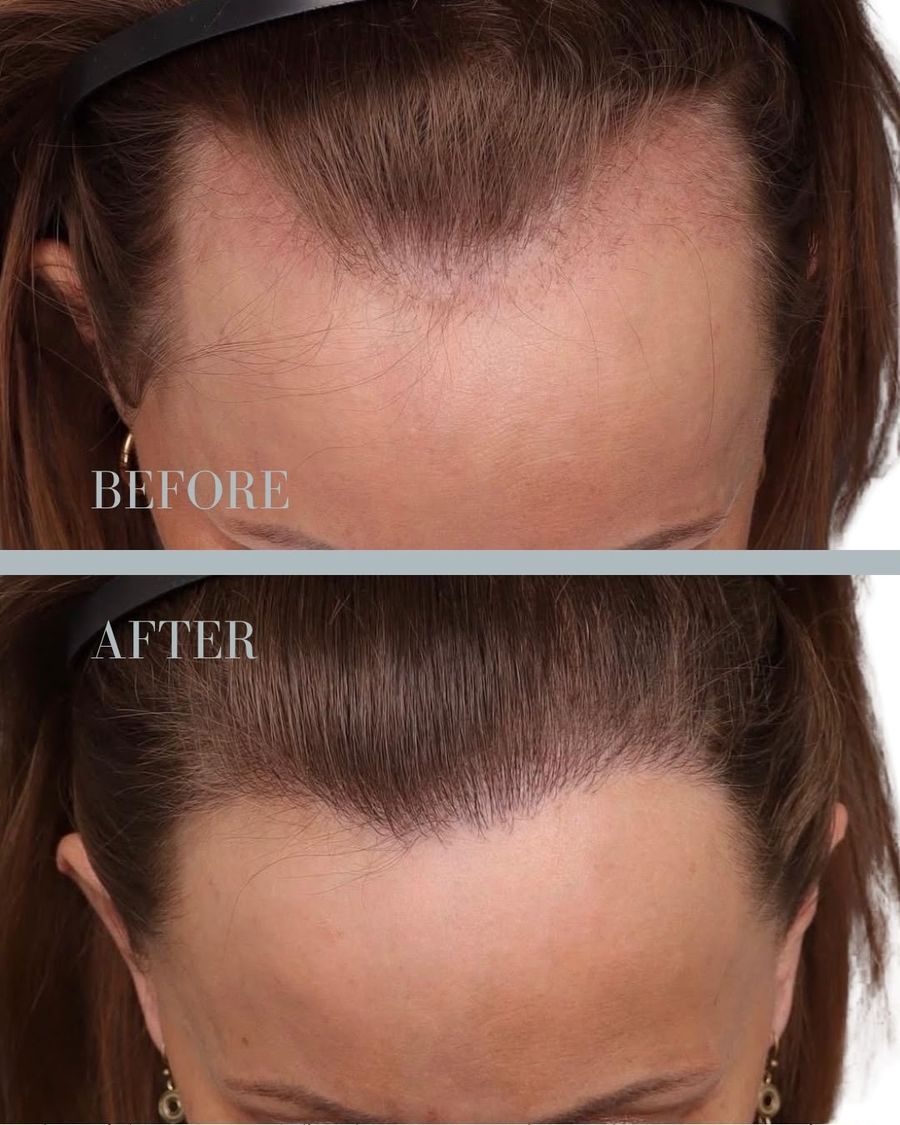 Before & after 01
 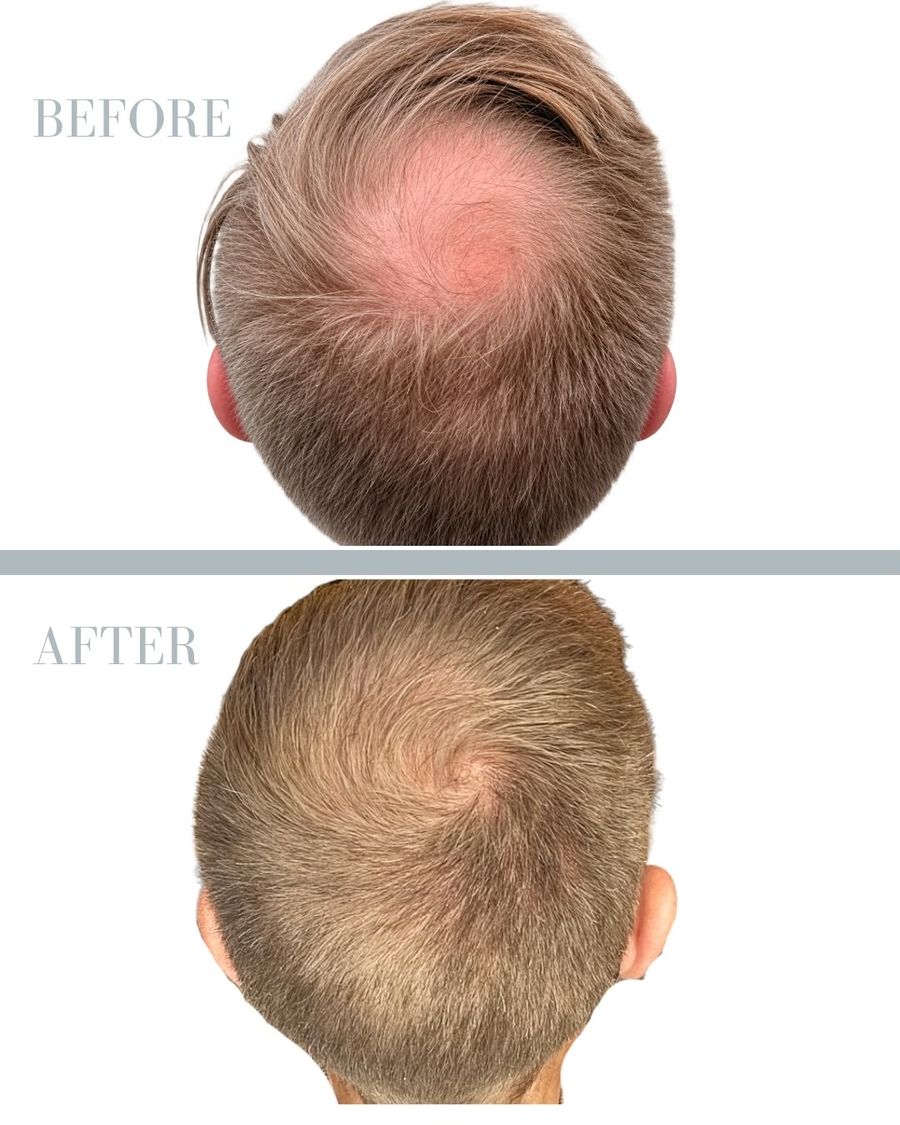 Before & after 02
 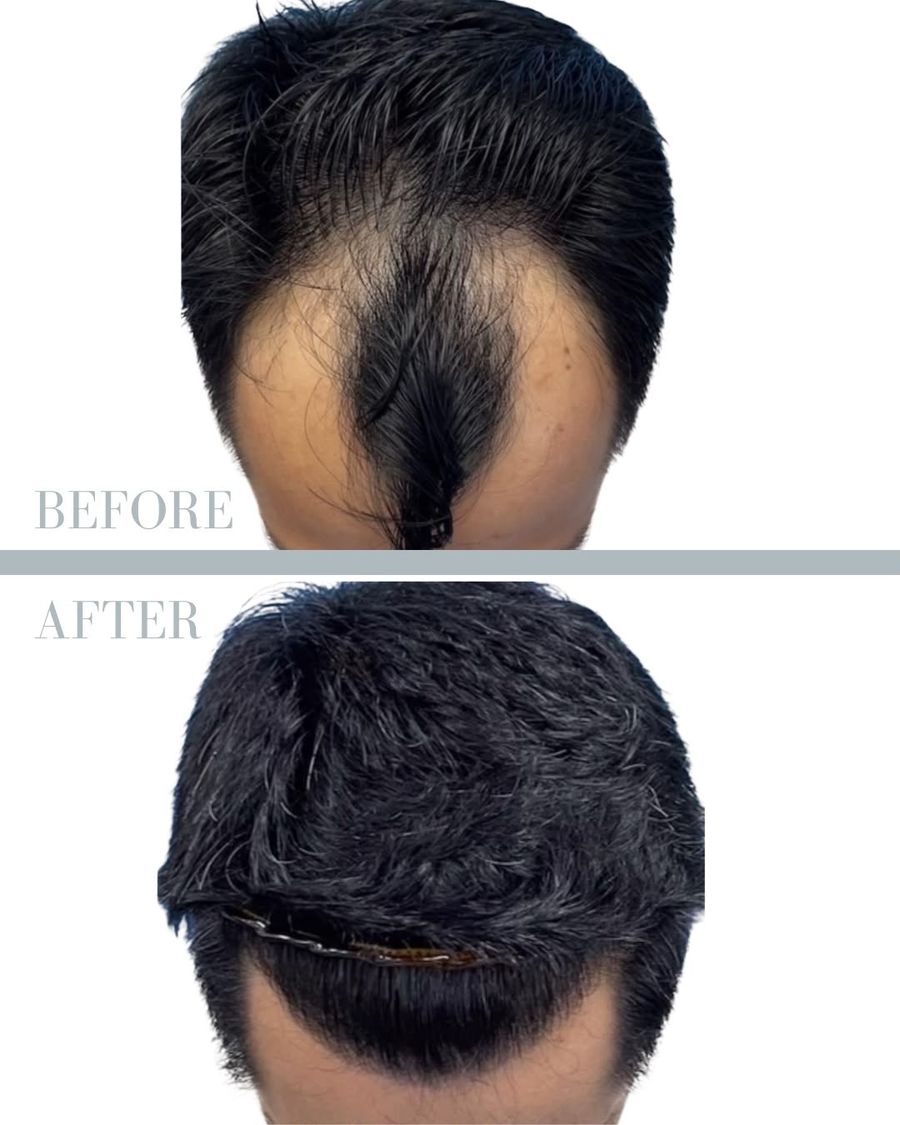 Before & after 03
 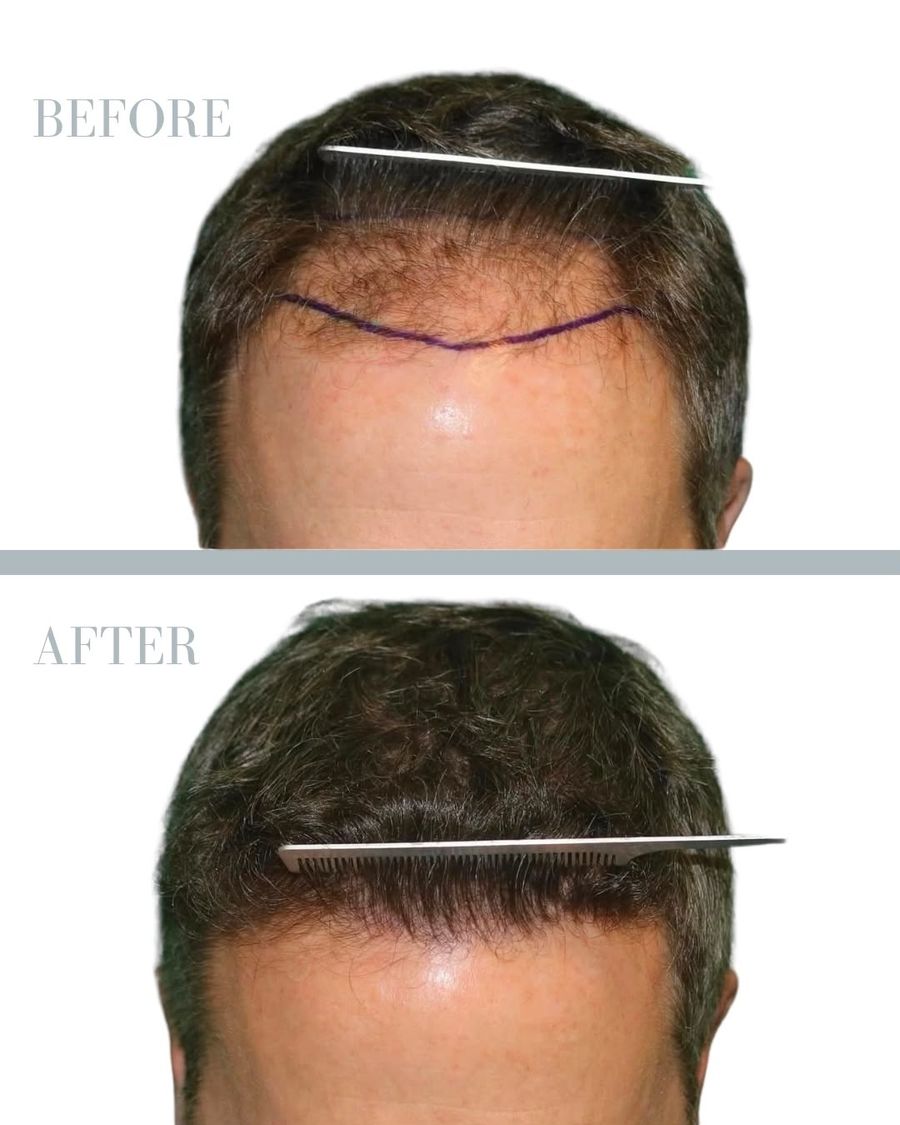 Before & after 04
 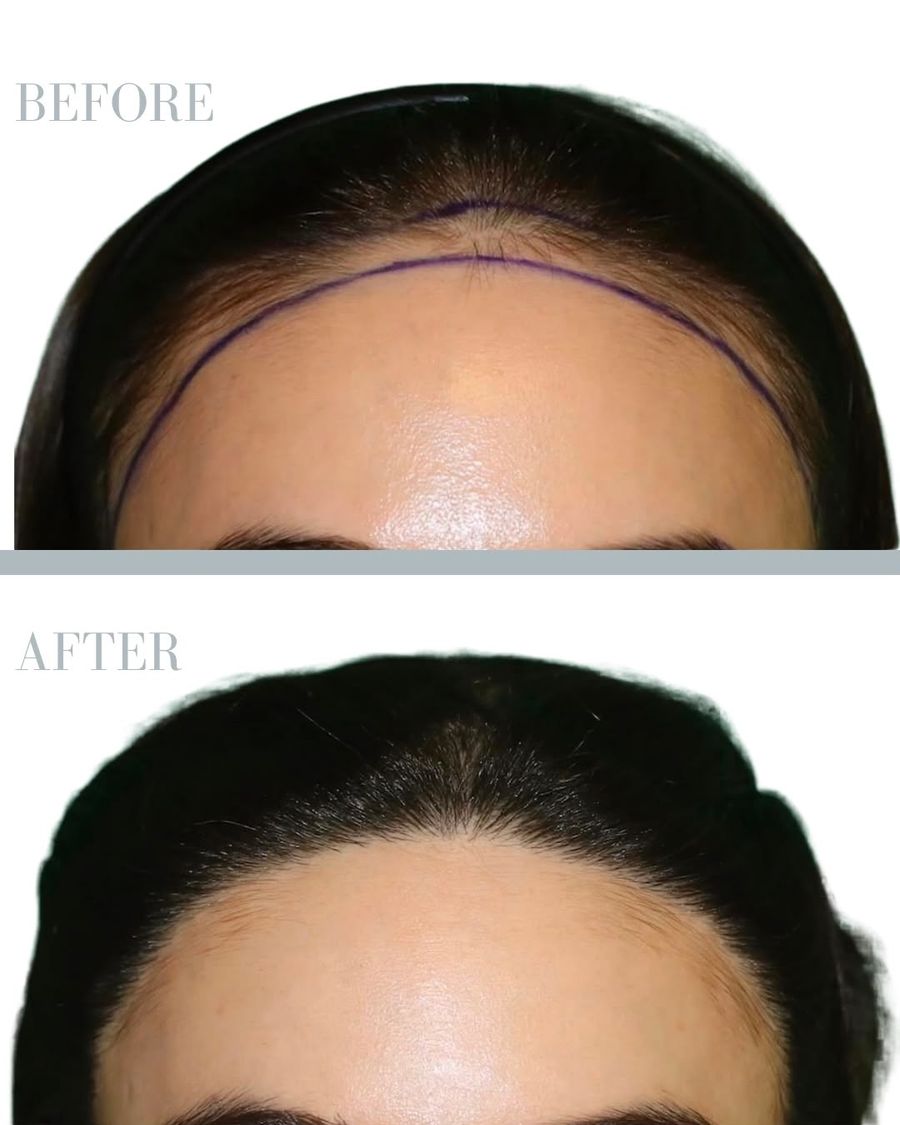 Before & after 05
 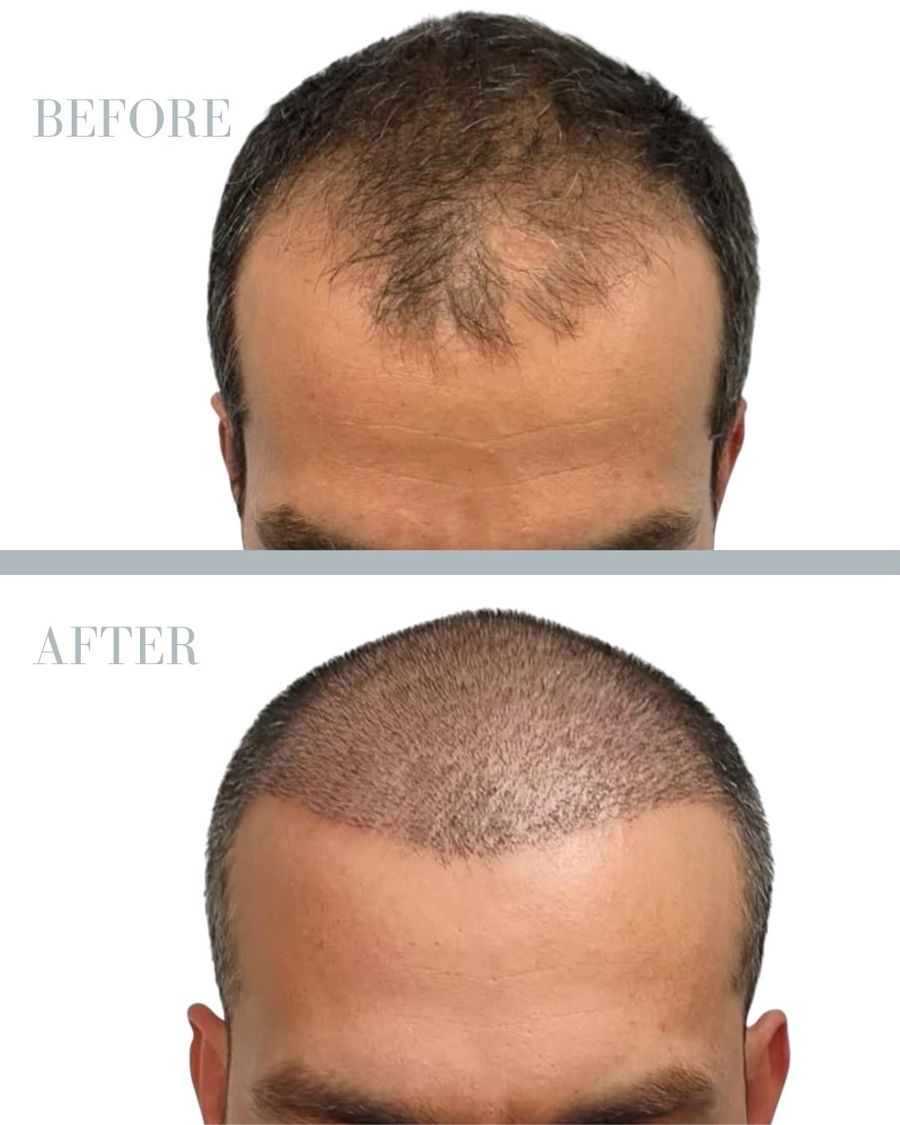 Before & after 06
 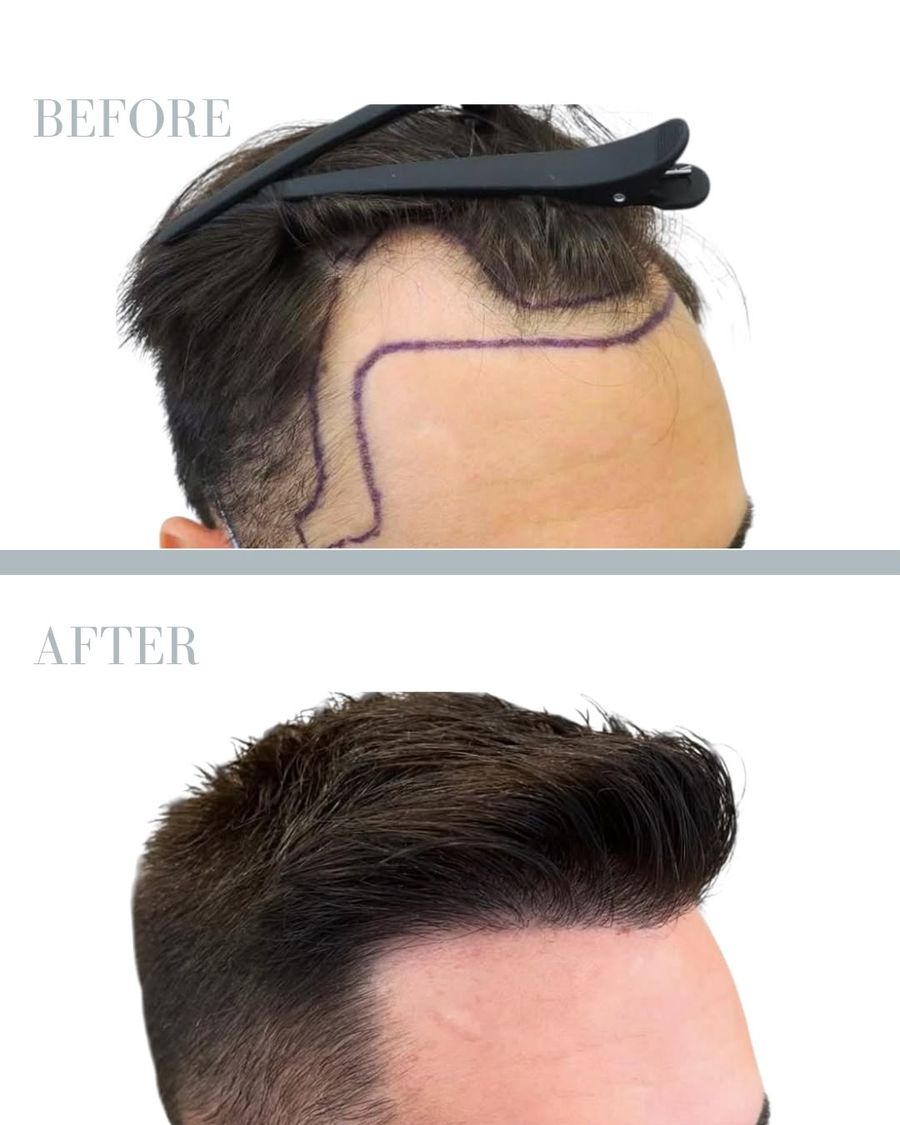 Before & after 07
 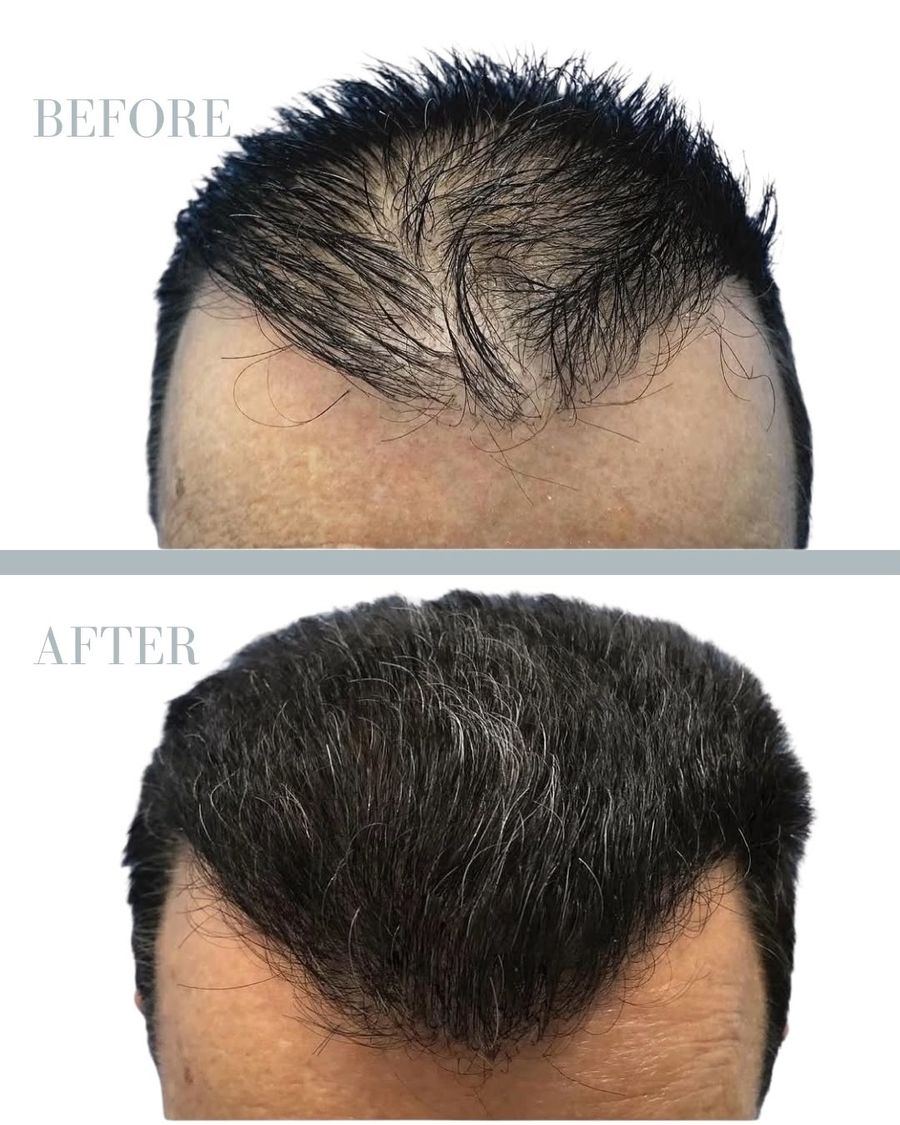 Before & after 08
 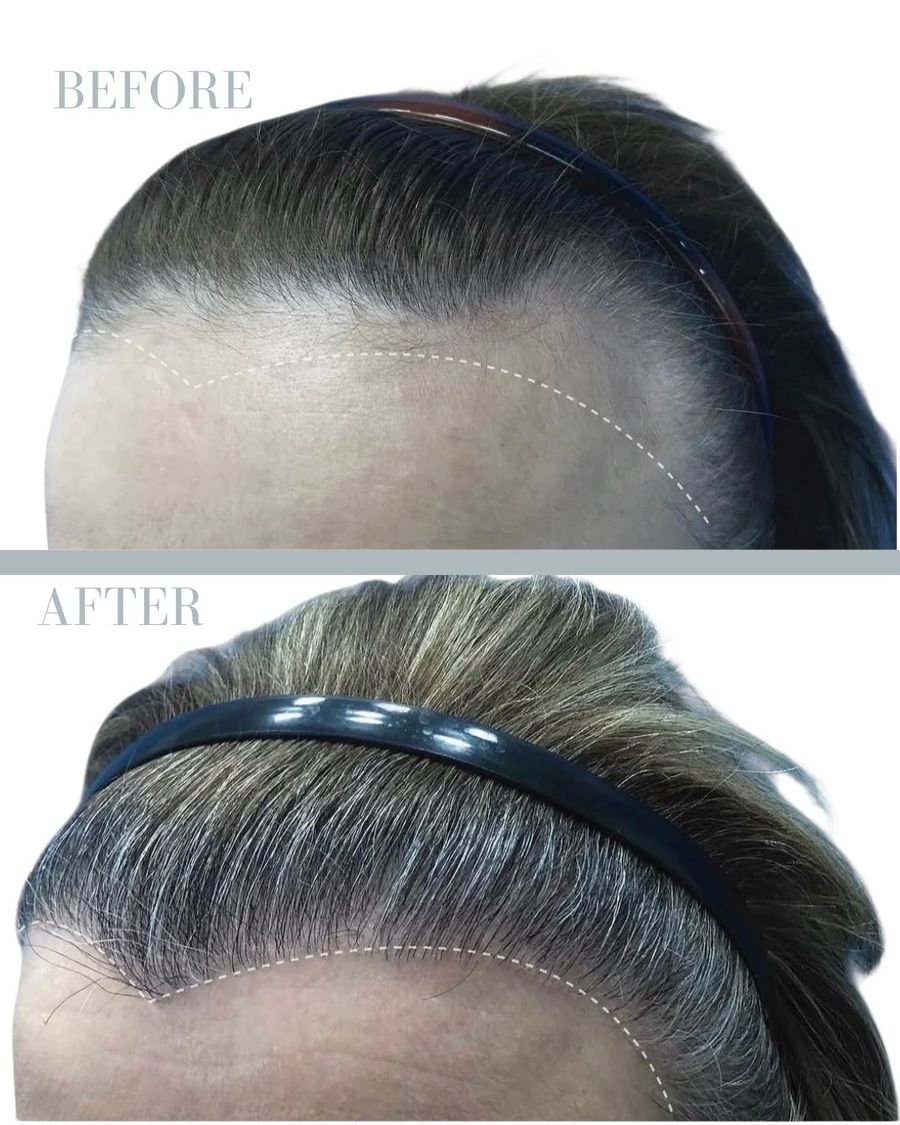 Before & after 09
 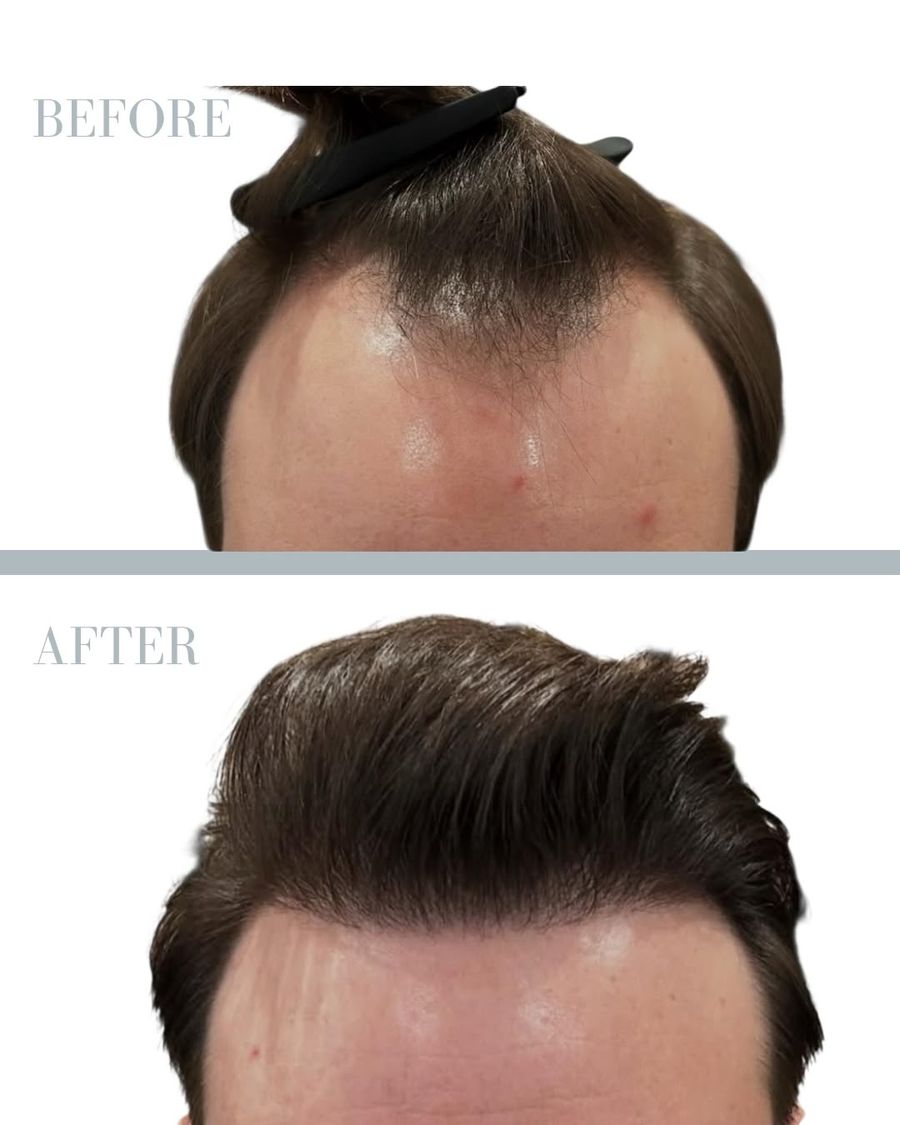 Before & after 10
 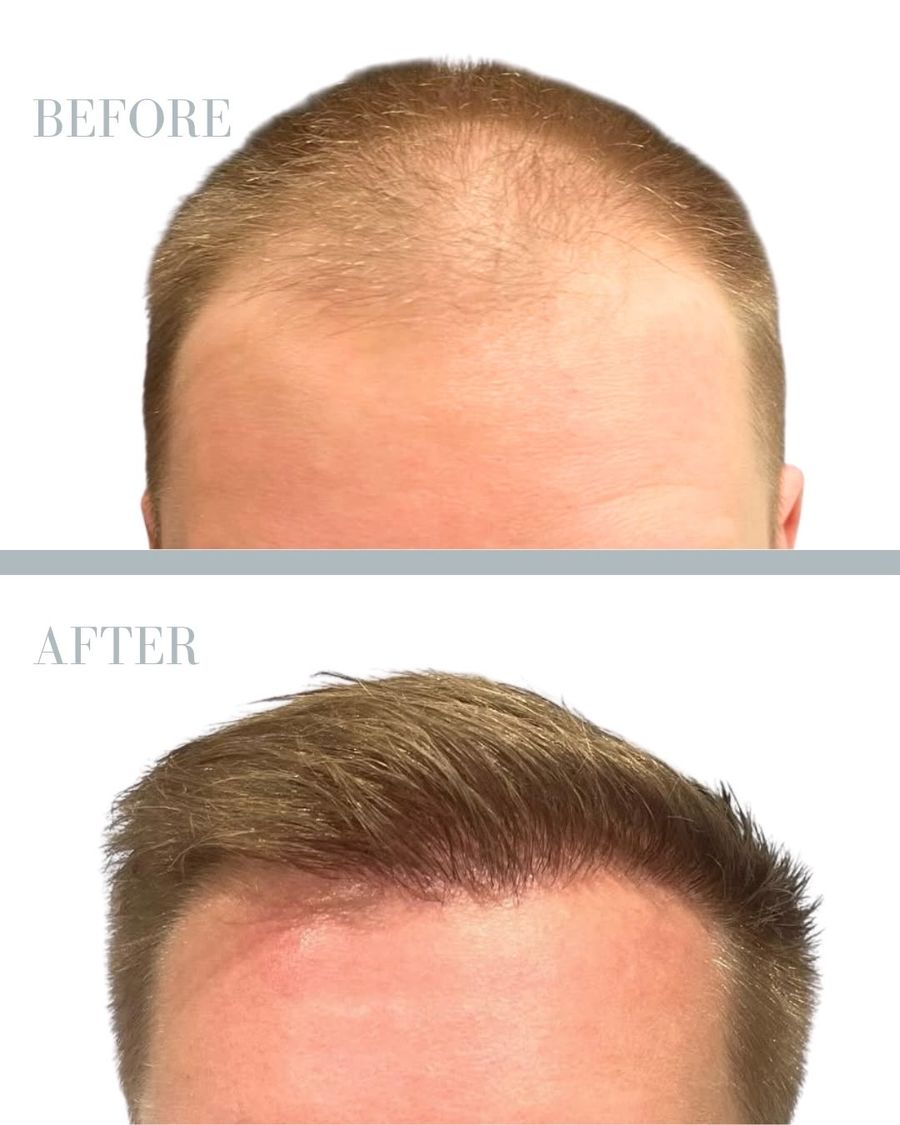 Before & after 11
 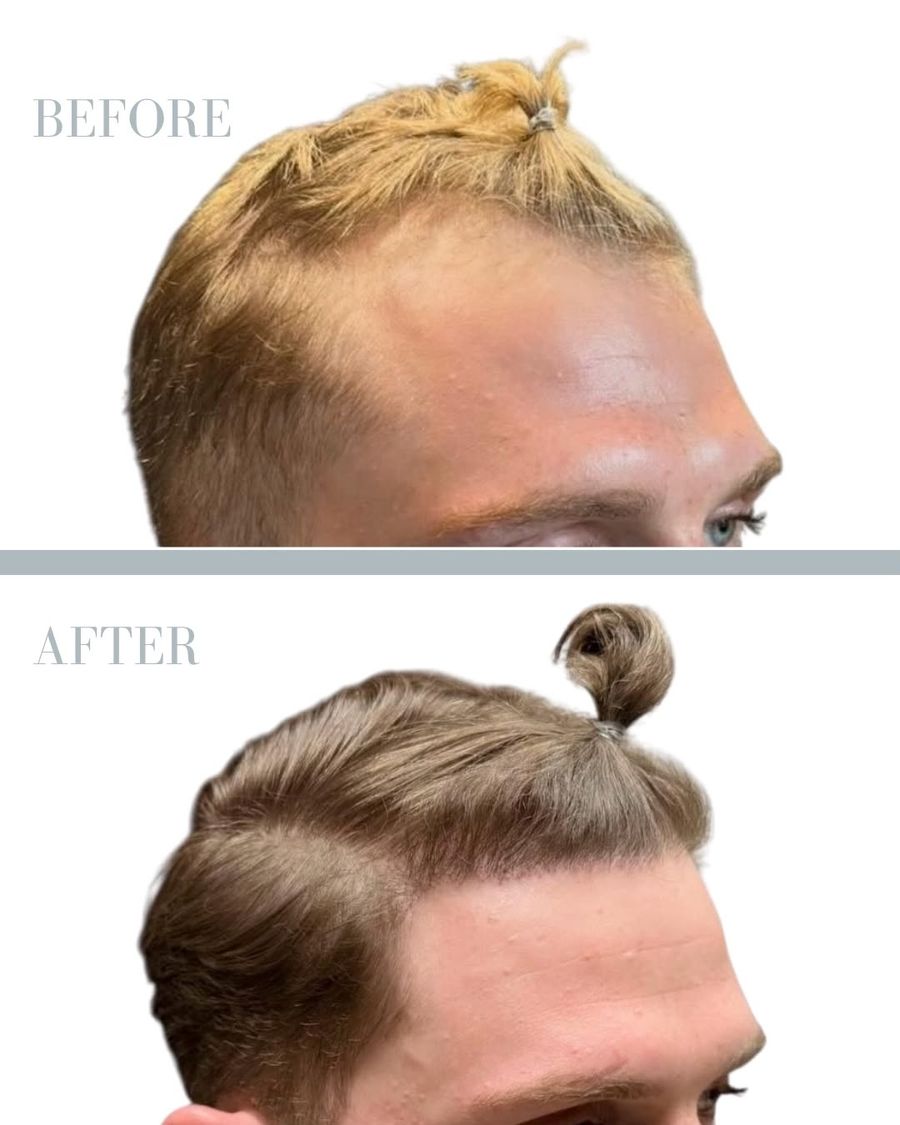 Before & after 12
 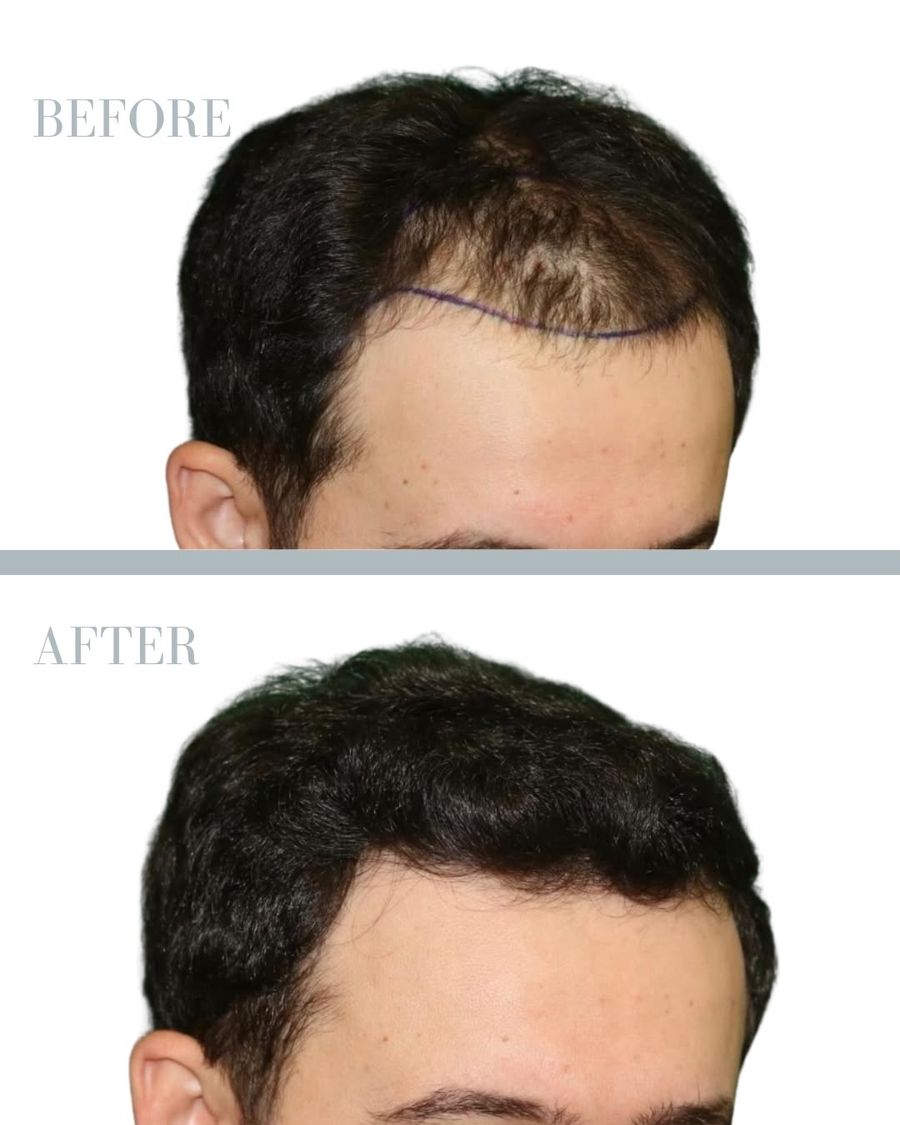 Before & after 13
 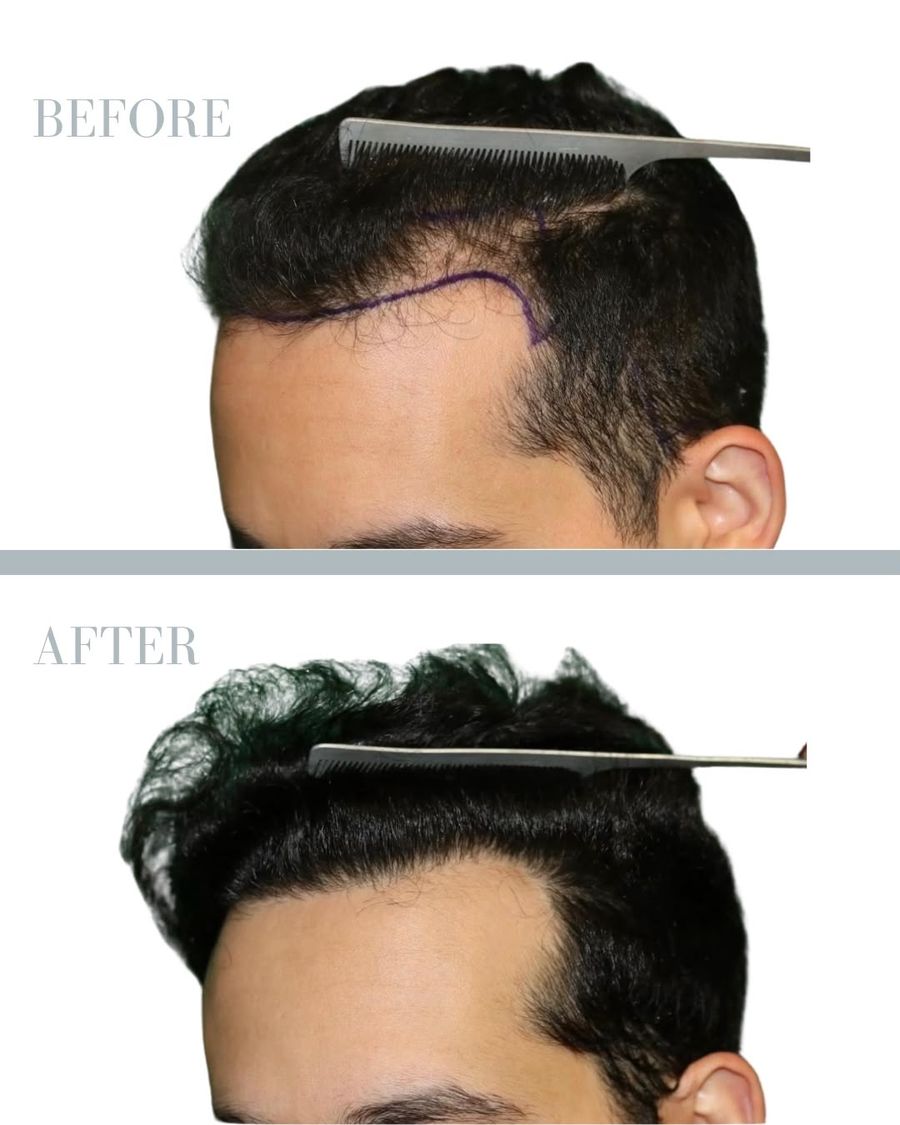 Before & after 14
 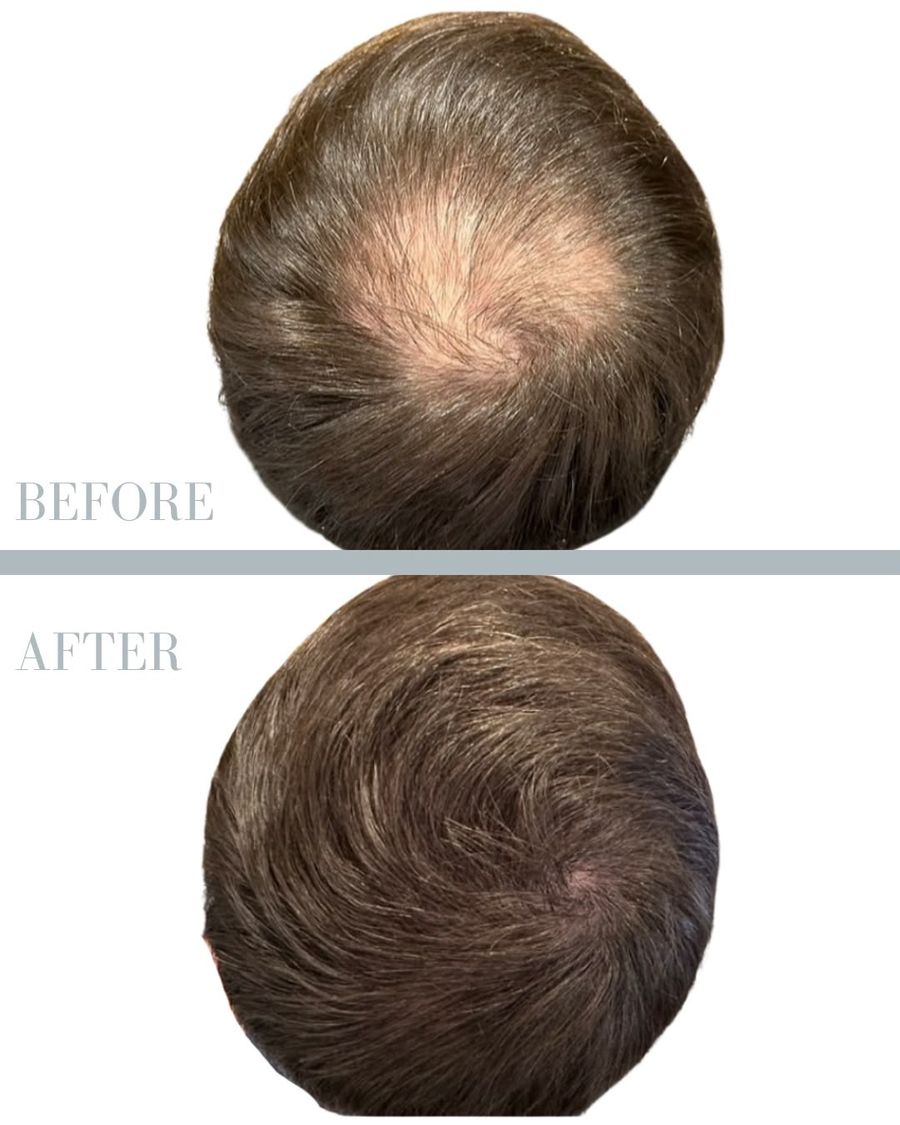 Before & after 15
 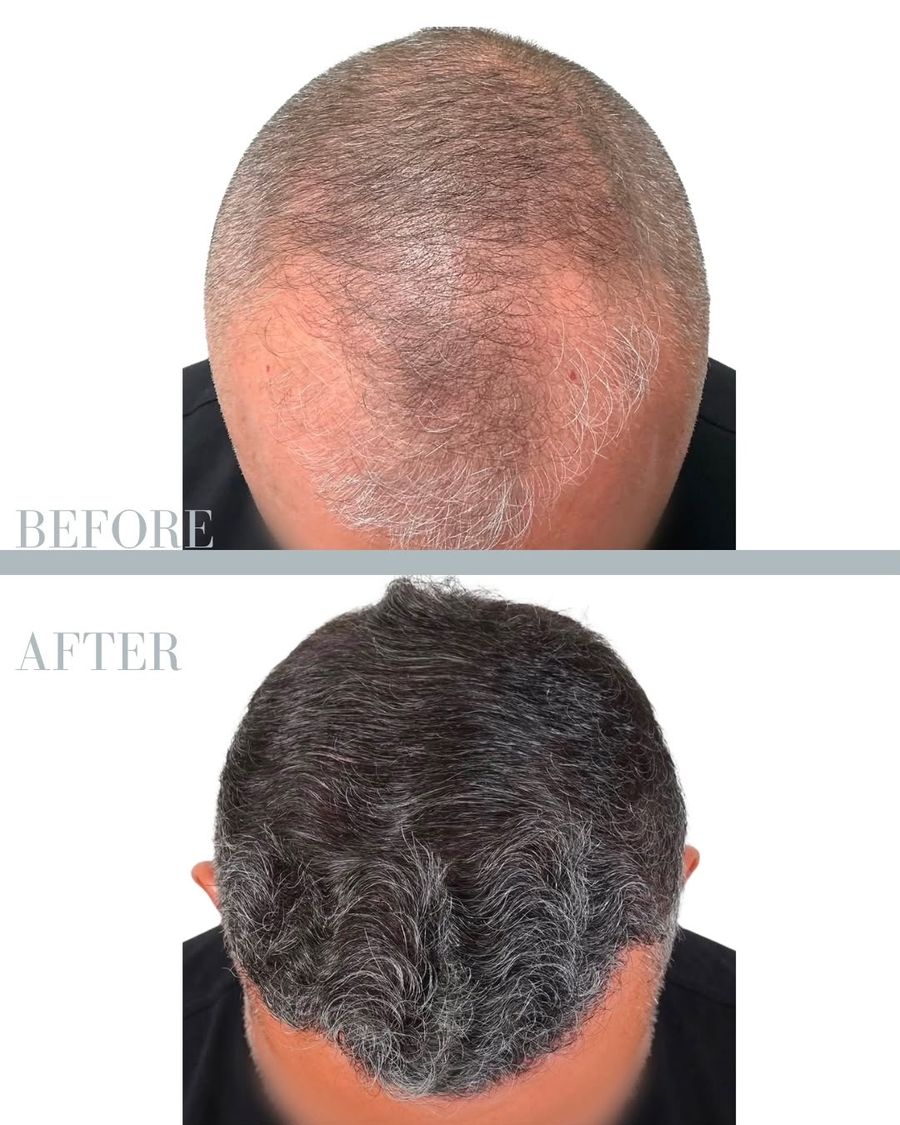 Before & after 16
 Hair transplant FAQ
Answers to what patients ask most. Choose a category to see the questions for before, during and after surgery.
Can’t find the answer you need? Contact us →
Book a consultation
Book a free consultation and we will go through your circumstances and build a plan for your hair. We look forward to helping you towards a natural hairline and a fuller, permanent result.
Book a free consultation